Common Applications of Centrifugal Pumps: How They Power Fluid Systems
Centrifugal pumps show up in more places than most people realize, from the water coming out of your tap to the fluid systems keeping an...
Based in Lafayette and trusted across the Gulf Coast, we bring real-world experience to every job and build long-term trust with the people running it.
From pump repair and rebuilds to custom machining and hard-to-source parts,
we’re the team you call when no one else can figure it out.
- Clark Edwards, Owner
6 min read
EV Pump
:
May 28, 2026 3:54:53 PM
|
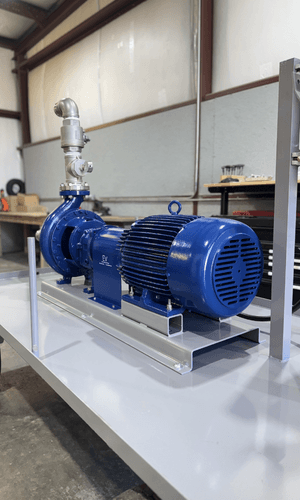
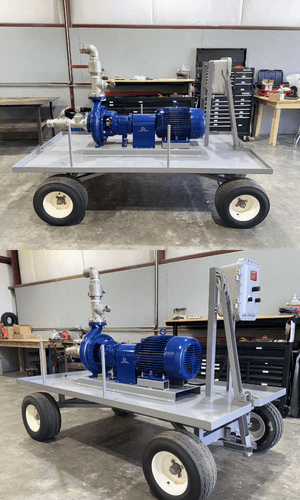
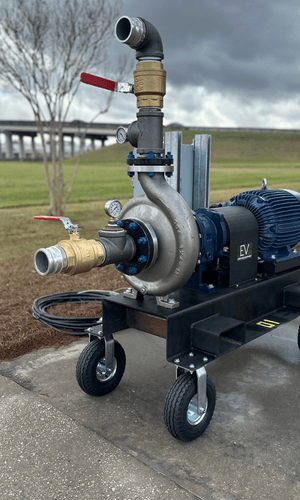
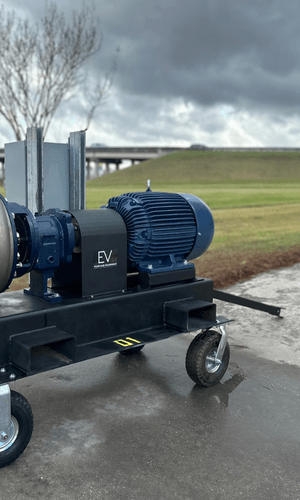
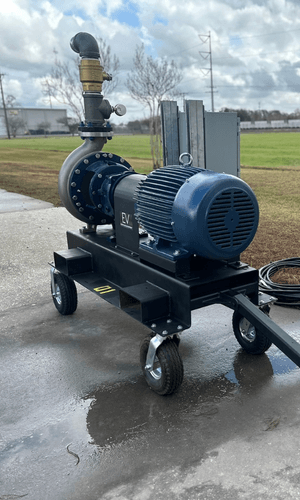
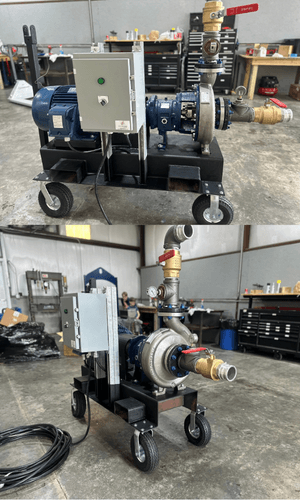
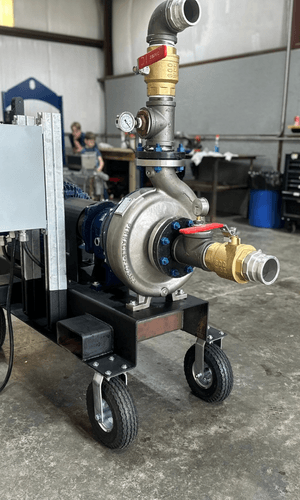
EV Pump designed and built two rounds of custom centrifugal pump transloading carts for Southland Electric and Cicada Logistics: first a cost-effective proof-of-concept set on a two-week timeline, then a full production set capable of unloading a rail car every 30 minutes. Both projects were delivered on time and on budget, over the Christmas holidays of 2025, and the customer has since come back for six additional carts. |
Rounds of Transloading Carts Delivered
POC Cart Lead Time
Max Flow Target Per Rail Car
Additional Carts Ordered After Delivery
This section introduces Southland Electric and Cicada Logistics, their relationship with EV Pump, what Cicada does in the energy logistics space, and why this partnership was built on more than proximity.
Southland Electric is a full-service electrical contractor based in Scott, LA and one of the first neighbors EV Pump had when we opened our original facility. That proximity turned into something more than proximity. Southland has become one of our most trusted customers, vendors, and partners across multiple projects. They share our "can-do" attitude, and that makes the work go smoothly.
Southland's client, Cicada Logistics, is a strategic partner in energy infrastructure and natural resource logistics. Cicada specializes in transloading essential commodities (frac sand, crude oil, and NGLs) ensuring efficiency and reliability in operations where there's no room for downtime.
This section explains what Cicada needed, the technical constraints that shaped the design, and why delivering two rounds of transloading carts - on two different timelines, over the holidays - made this project anything but straightforward.
Cicada needed a cost-effective solution to transload rail cars into trucks at a rail yard in Texas. The first ask was a proof-of-concept (POC): inexpensive, minimum viable product (MVP) pump carts that could validate the process before committing to a permanent setup. If the POC worked, they'd move to full production carts.
Both phases came with tight timelines. The POC carts needed to be ready within two weeks of the PO. The production carts needed to be delivered within weeks as well and both projects landed squarely over the Christmas holidays.
For the production carts, the design parameters were specific:
Maximum flow of 500 GPM - the limit imposed by the bottom unloading valve on a standard rail car
Needed to load a truck every 30 minutes
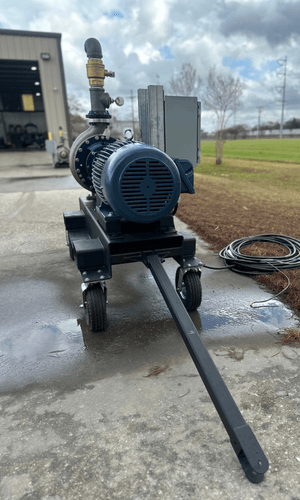
Pump had to be trailer-mounted on a four-wheel trailer for stability when unhooked
Had to handle the chemical makeup and viscosity range of the fluids being moved
Needed to be rugged, reliable, and cost-effective compared to established transloading market players
For the POC carts, cost was the primary driver. Cicada needed simple, functional MVPs - not overbuilt equipment they might replace. Every dollar saved on materials and finishing was the right call.
This section covers why Southland and Cicada kept coming back to EV Pump prior delivery track record, centrifugal pump system expertise, and a working relationship built on trust and shared accountability.
They called us the first time because we were neighbors and they'd watched how we worked. They kept calling because we delivered.
By the time these projects came in, EV Pump had already completed multiple projects for Southland under compressed timelines. They knew what to expect from us: honest scoping, practical design, and execution without excuses. We also already had hands-on experience with centrifugal pump systems handling fluids similar to what these rail cars were moving - which cut down the learning curve on seal selection and material compatibility.
The fact that we're work neighbors made communication easy. When a decision needed to be made quickly, it got made quickly.
This section walks through both build phases: the cost-driven POC carts completed in under two weeks, and the full production carts designed for 500 GPM rail car unloading including pump sourcing, platform selection, and the design decisions that made both projects work.
The goal for Phase 1 was simple: build functional transloading carts as cheaply and quickly as possible, without sacrificing the ability to convert them into permanent equipment if the POC succeeded.
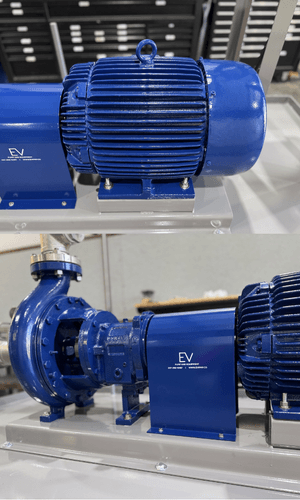
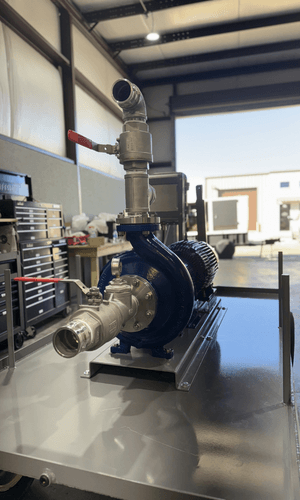
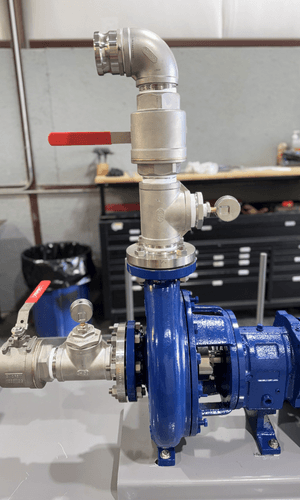
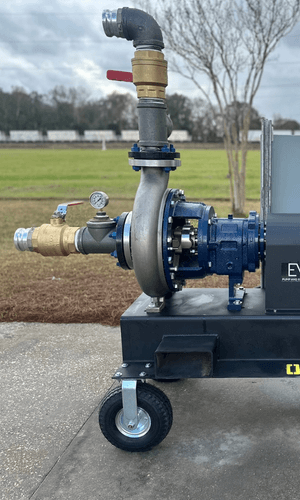
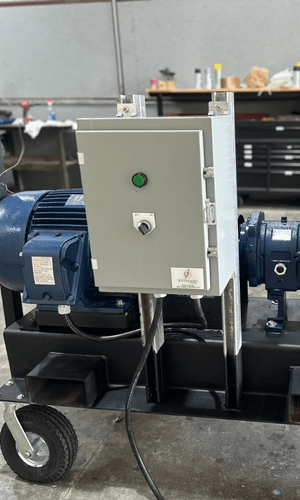
EV Pump sourced the same pump and motor combination used on prior Cicada/Southland projects. Running identical units accomplished two things: it provided built-in critical spare parts compatibility, and it left the door open to convert the MVP units to permanent duty without re-engineering the system.
The design was intentionally stripped down:
Simple fabricated baseplate with fork pockets for easy forklift movement
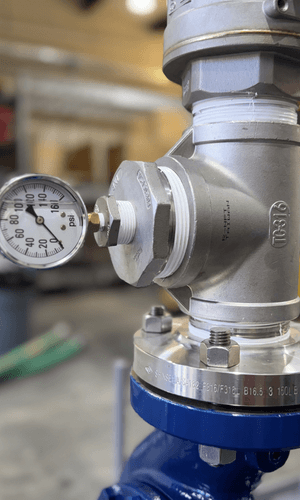
Carbon steel valves and fittings in place of stainless steel, appropriate for a short-duration application
Standard oilfield service hoses instead of chemical-resistant hose, cutting material cost roughly in half on that component
10-foot hose sections with camlock connections instead of 20-foot sections, based on crew feedback from earlier carts
Basic casters added so the crew could reposition carts by hand when a forklift wasn't available
Standard metal spray paint in place of the three-step offshore-rated epoxy EV Pump typically applies on permanent builds
The POC carts were completed and delivered on Christmas Eve, proving that "on time" means on time, even when the calendar isn't on your side.
With the POC validated, Cicada moved forward on full production units. The design requirements stepped up accordingly.
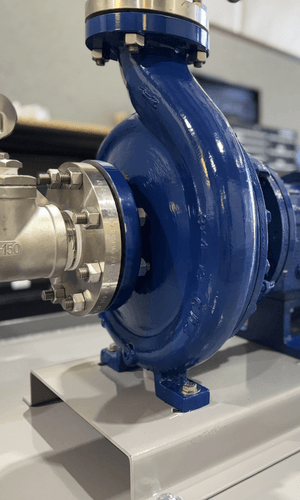
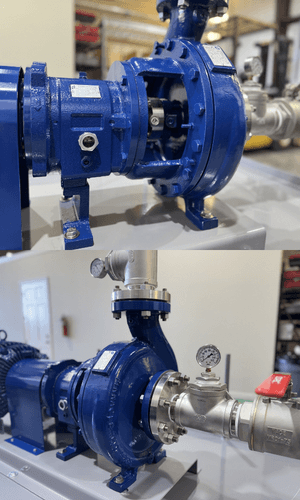
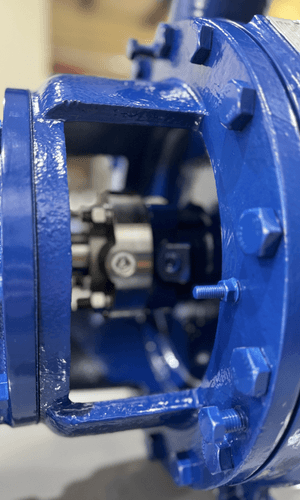
Pump sizing and sourcing: EV Pump sized a centrifugal pump for the application and went to market across multiple vendors. Pinnacle-Flo came through with the delivery window that fit the project timeline, supplying an ANSI centrifugal pump rated for the required flow rates and pressures. EV Pump had prior experience with Pinnacle-Flo's ability to deliver on schedule, which gave us confidence in the call.
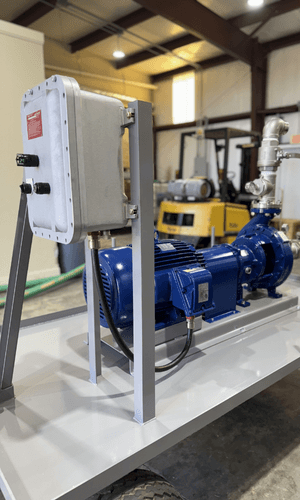
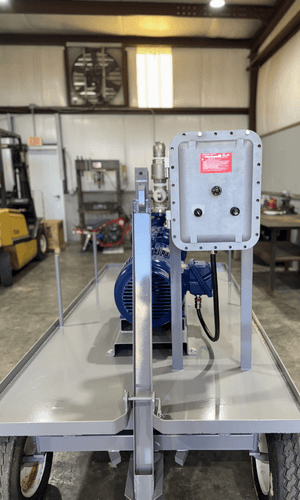
Platform selection: Instead of a standard equipment trailer, EV Pump sourced a hay trailer from a local agricultural supply store. It sounds unconventional — and it is. But a hay trailer checked every box: inexpensive, immediately available off the shelf, four wheels with steering, and a naturally stable platform to build from. That's the kind of practical thinking that keeps projects on budget.
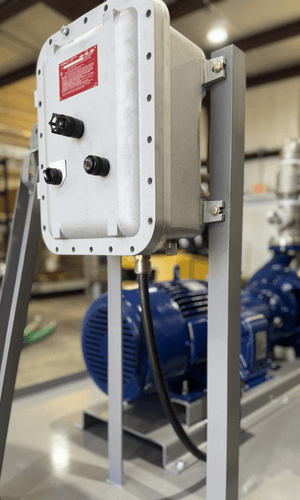
System build: EV Pump built out the full pump system while Southland handled the electrical work - the same division of labor that has made this partnership efficient across multiple jobs.
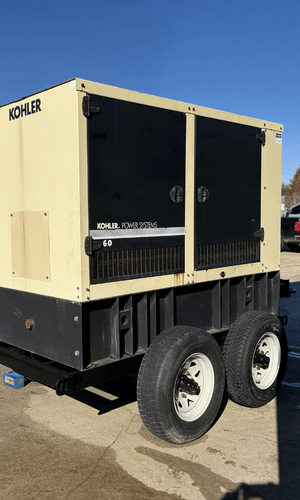
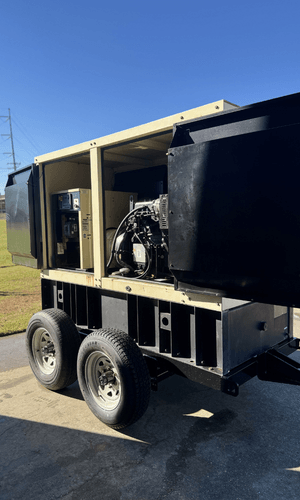
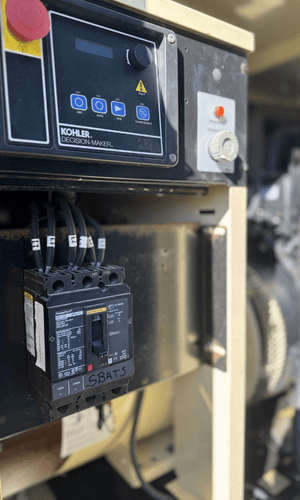
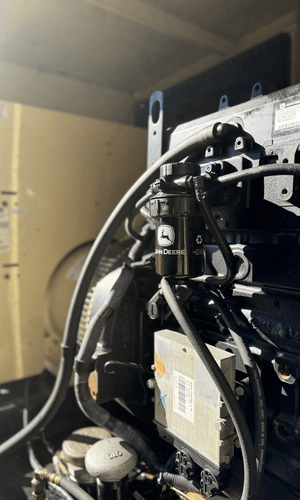
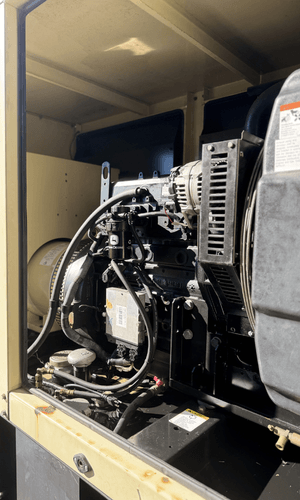
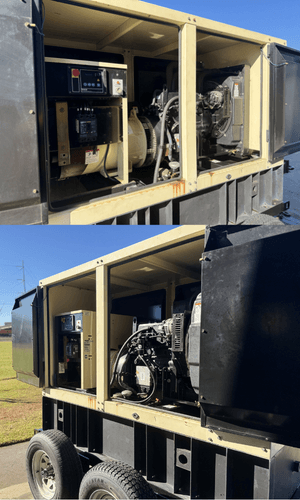
Generator: In addition to the transloading carts, EV Pump sourced a used Tier 3 generator and trailer-mounted it to provide power for the rail yard operation.
The production carts were completed and delivered over the Christmas holidays of 2025, on time and on budget.
This section covers the results: both sets of carts delivered on time and on budget over Christmas 2025, field performance that exceeded the 30-minute-per-truck target, and six additional carts ordered since delivery.
Both sets of transloading carts were delivered on schedule and within budget — across one of the most difficult weeks of the year to be running a fabrication shop.
The results in the field exceeded expectations. Southland/Cicada reported that the carts were offloading rail cars faster than the 30-minute-per-truck target they had designed for. That kind of performance confirmation is what you want from a new design.
Since delivery, Cicada has come back for six additional transloading carts of varying type and capacity. That's not a one-off project. That's a repeatable platform.
This section highlights what other operators can take away. From fluid and seal selection, to MVP design strategy, to the practical engineering decisions that kept both projects on schedule and on budget.
1. Design for the fluid, not just the flow rate. Understanding the chemical makeup of what you're moving, and knowing what temperature range to design for, is not optional. Proper mechanical seal selection based on fluid compatibility is what separates a cart that runs clean from one that fails prematurely. We got it right on this project, and it showed in the field results.
2. An MVP doesn't have to be a throwaway. The POC carts were designed with the permanent build in mind. Using the same pump and motor combination as prior projects gave Cicada critical spare parts interoperability and a real upgrade path. Cost-cutting decisions were made strategically, not arbitrarily.
3. You don't need a custom trailer when the right off-the-shelf option exists. A hay trailer from an ag supply store was the right call for this application - cheaper, faster, and stable. Practical engineering sometimes looks different than expected. That's fine.
4. Small operator feedback changes make a big difference. Switching from 20-foot hose sections to two 10-foot sections with camlock connections came from the guys running the equipment. That kind of feedback loop, where the crew is heard and the design responds, makes for equipment that actually works in the field, not just on paper.
5. We now have a design on the shelf. One of the best outcomes of this project is that EV Pump has a proven transloading cart design ready to go. Future builds can be turned around faster and with higher confidence. If you need a rail car transloading solution, across any commodity type, we've run this road before.
A transloading cart is a portable pump system used to offload commodities from rail cars into trucks or storage. In this application, a centrifugal pump mounted to a trailer or skid moves fluid from the rail car's bottom valve into waiting tanker trucks at a rail yard.
EV Pump used an ANSI centrifugal pump sourced through Pinnacle-Flo, sized for a 500 GPM maximum flow rate — the limit imposed by standard rail car bottom unloading valves.
The key variables are: maximum flow through the unloading valve, discharge pressure requirements, fluid chemical makeup, viscosity at operating temperature, and whether the unit needs to be mobile or stationary. EV Pump evaluates all of these before sizing any system.
Yes. The POC carts on this project were delivered within two weeks of PO. The production carts followed shortly after. EV Pump now has a proven design template that can accelerate future transloading cart builds significantly.
This project was designed for chemicals similar in makeup to NGLs and crude oil. With proper mechanical seal selection and material specification, EV Pump can design transloading systems for a wide range of liquids. Chemical compatibility and operating temperature range are always part of the scoping conversation.
EV Pump & Equipment is a leading provider of high-performance fluid handling solutions, specializing in custom pump systems and comprehensive services for industries like oil & gas, petrochemical, and municipal water. With a deep passion for pumps and a commitment to excellence, we deliver reliable, efficient solutions tailored to meet the unique needs of every client. Our hands-on approach and elite equipment ensure that your operations run smoothly and efficiently, every time.
Centrifugal pumps show up in more places than most people realize, from the water coming out of your tap to the fluid systems keeping an...
Centrifugal pumps are essential in various industries, including water treatment, oil and gas, chemical processing, and construction. Their...
Centrifugal pumps are the workhorses of fluid handling systems, moving everything from liquids and gases to slurries with impressive efficiency. If...