Skip to the main content.

Who We Are

Trusted to fix what others can’t.

Based in Lafayette and trusted across the Gulf Coast, we bring real-world experience to every job and build long-term trust with the people running it.

Comprehensive Pump & Equipment Solutions

If it rotates, moves fluid, or needs fixing, we’ve got it covered.

From pump repair and rebuilds to custom machining and hard-to-source parts,
we’re the team you call when no one else can figure it out.

"
We believe our impact goes beyond pumps. The energy and industrial sectors are crucial to global development, and we’re proud to contribute with our expertise and broad vision.

- Clark Edwards, Owner

6 min read

How EV Pump Built a Chemical Injection Skid for Turbo Chem


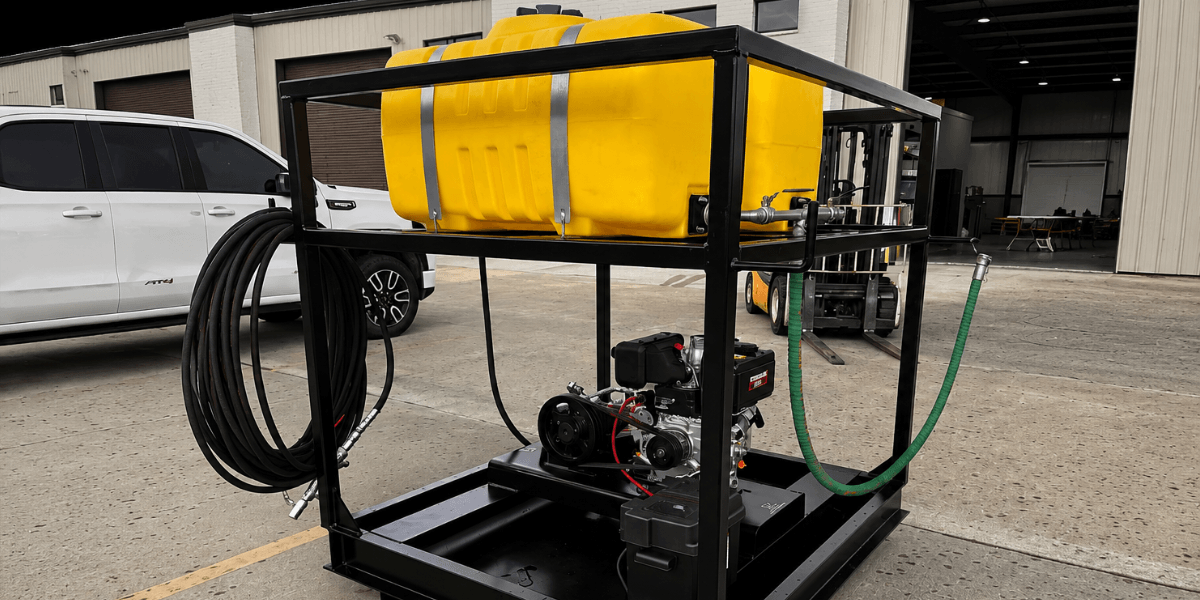
EV Pump designed and built a custom chemical injection skid for Turbo Chem International, replicating a proven design while improving safety, reliability, and long-term serviceability. The project included a full 3D model, upgraded metallurgy and piping, and a high-pressure Udor triplex pump package driven by a Yanmar diesel - all delivered on budget and aligned with Turbo Chem’s service schedule.

Project Snapshot

1

Custom chemical injection skid designed & built

3,000+ psi

Pump discharge capability at ~8 GPM

1

Walkdown → 3D model → build workflow

1

Diesel-driven, skid-mounted triplex package

+

Design is repeatable from 3D model for additional units


About Turbo Chem International

This section introduces Turbo Chem, their role in the oil and gas industry, and why chemical injection uptime is so critical to their business.


Who is Turbo Chem International, and what do they do?

Turbo Chem International, Inc. is an international supplier of specialty chemicals for the drilling, production, and midstream segments of the oil and gas industry. Founded in 1982 and headquartered in Scott, Louisiana, Turbo Chem supports operators and pipelines with treatment programs that keep wells flowing, protect assets, and maintain throughput.


Why does a reliable chemical injection skid matter to Turbo Chem?

Chemical injection isn’t a “nice-to-have” for Turbo Chem. It’s how they deliver value to their customers. When an injection unit goes down:

  • Wells and pipelines can’t be treated on schedule

  • Techs are pulled off revenue-generating field work to do emergency shop work

  • Treatment quality and consistency can be impacted

For a company built on field performance and dependable service, having a stable, repeatable chemical injection skid is mission critical.


The Challenge

This section outlines the exact problem Turbo Chem faced with their existing unit and how it was affecting service capacity and operations.


What issues was Turbo Chem seeing with their existing chemical injection skid?

Turbo Chem was running a high-pressure chemical injection skid capable of treating wells and pipelines operating in excess of 1,500 psi. After multiple years of service, the skid began to show signs of instability and intermittent downtime. While the core design worked, age and wear meant the unit was no longer as reliable as their growing customer base required.


How was this impacting operations and revenue?

Every time the unit was down, the impact was twofold:

  • Reduced ability to service customers – Fewer wells and lines could be treated on schedule.

  • Lost technician time – Skilled field techs were spending time in the shop troubleshooting equipment instead of performing billable work.

Turbo Chem’s team had the skillset to handle basic repairs and maintenance, but they needed a more robust long-term solution than constantly nursing an aging skid along.


Why EV Pump

This section explains why Turbo Chem chose EV Pump and what they were looking for in a new system.


Why did Turbo Chem call EV Pump instead of building another skid in-house?

Turbo Chem wanted a new chemical injection skid built to the same functional standard as their existing unit but with better reliability, supportability, and long-term repeatability. They were looking for:

  • Commonality across parts so they could standardize critical spares and avoid stocking different engines and pump types.

  • A diesel-driven, skid-mounted unit built around a small positive displacement triplex pump capable of typical wellsite and pipeline injection pressures.

  • A partner who could own the design, modeling, and mechanical integration while keeping the project on budget and within a reasonable timeline.

They chose EV Pump because they knew we could:

  1. Walk down the existing unit

  2. Engineer a repeatable design

  3. Manage component selection for pressure, metallurgy, and safety

  4. Deliver a skid that would drop into their operation with familiar controls and performance

Even though the project wasn’t a fire drill, both teams understood that a catastrophic failure of the existing unit would instantly make the new skid mission critical so schedule discipline still mattered.


The Design & Build Plan

This section walks through how EV Pump documented the existing skid, translated it into a 3D model, and then turned that model into a build-ready design.


How did EV Pump start the project?

EV Pump met Turbo Chem’s team on location in Texas for a field walkdown and design review of the current chemical injection unit. During that visit we:

  • Documented major components, layout, and piping paths

  • Reviewed how the skid was actually used day-to-day, not just how it looked on paper

  • Discussed performance expectations, operating pressures, and typical service scenarios


What was the next step after the walkdown?

From that field visit, EV Pump created a full 3D model of the skid and all major component parts. That model became the single source of truth for:

  • Skid dimensions and structural design

  • Pump, engine, and piping layout

  • Clearance, access, and service points

  • Future repeatability if Turbo Chem wants additional units


Who handled fabrication and assembly?

  • A trusted fabricator in the Lafayette area built and powder-coated the structural skid to our design.

  • EV Pump handled all design, component selection, and mechanical integration of the pump, engine, piping, and safety systems.


Managing Risk: Components, Pressure, and Safety

This section explains how EV Pump handled lead times, pressure ratings, and safety-critical design decisions.


How did EV Pump reduce the risk of a critical failure during the project?

To offset the risk posed by a potential failure of the existing unit, EV Pump had a critical spares strategy for the high-pressure skid equipment and ordered all major mechanical components at the start of the project:

Because the new pump and engine package were similar to the existing unit, we knew that in a worst-case scenario we could install the new equipment on the old skid and get Turbo Chem back online quickly. This gave the project built-in contingency without slowing the design.


What pump did the skid use and why?

The skid uses a small Udor triplex pump capable of generating 3,000+ psi at around 8 GPM. While originally designed for the car wash industry, this pump has ideal crossover application for:

  • Agricultural spraying

  • Oil and gas treating

  • Any industry needing high-pressure injection with moderate flow

It offered the pressure Turbo Chem needed, in a compact footprint, with a proven track record in other demanding environments.


How did EV Pump address piping safety and overpressure risk?

We knew from the beginning that the pump could generate pressures that would overstress standard wall fittings if not designed correctly. To protect both people and equipment, we:

  • Selected heavier-wall stainless steel piping than a baseline design might call for.

  • Installed a pressure relief valve set to relieve well below the pipe’s burst pressure.

The result: a piping system that maintains full process capability while providing a substantial safety margin in the event of a blockage or misoperation.


Why stainless steel for the fluid end and piping?

The skid’s stainless steel pump fluid end and piping were chosen to handle a wide range of chemicals without worrying about:

  • Material degradation

  • Corrosion-related failures

  • Compatibility issues when fluids change between jobs

This gives Turbo Chem the flexibility to use the unit across different chemical programs without needing to redesign or restrict service based on metallurgy.


Why use a Yanmar diesel engine instead of gas?

The skid is powered by a small Yanmar diesel engine, selected for:

  • Better torque at low RPM

  • Fuel consistency (most oilfield equipment is already diesel-powered)

  • Simplified logistics with a single fuel source instead of managing both gas and diesel on site

In the field, that translates to a more robust and familiar power package for Turbo Chem’s techs.


For more information on how we choose diesel engines or electric pumps, check out this read: Which Should You Choose? Tier 4 or 3 Diesel Engines vs. Electric Pumps


Outcomes

This section summarizes the results of the project: what was delivered, how it performs, and how it sets Turbo Chem up for the future.


What did EV Pump ultimately deliver?

EV Pump delivered a well-designed, high-pressure chemical injection skid that:

  • Matches the performance of Turbo Chem’s trusted existing unit

  • Improves safety through upgraded piping and relief design

  • Standardizes components for easier spares management

  • Is backed by a full 3D model for future replication


How long is the skid expected to stay in service?

Based on component selection, design choices, and the operating environment, we expect the skid to provide multiple years of reliable service with standard maintenance and rebuild intervals, just like Turbo Chem had experienced with their original unit.


Can this skid be reproduced for additional units?

Yes. Because the skid was fully modeled in 3D:

  • The design can be reproduced with minimal rework

  • Future units can be adjusted for specific service or footprint needs

  • Turbo Chem now has a platform, not just a one-off solution


Lessons for Other Operators

This section captures the broader takeaways: where this kind of project fits, and what others can learn from Turbo Chem’s approach.


Where else does this chemical injection skid concept apply?

The core design has applications in any operation that needs high-pressure chemical injection with a compact, diesel-driven package, including:

  • Oil and gas treating

  • Pipeline and midstream injection

  • Agricultural spraying at higher pressures

  • Industrial processes where staged centrifugal pumps can’t reach required pressure

A small Udor triplex pump should be on the short list for applications where the pressure exceeds what a staged centrifugal can provide, but you still want manageable size and serviceability.


What’s the big takeaway from this project?

One of the most interesting aspects of this skid is the cross-application of equipment:

Taking a pump originally designed for car washes or agricultural spraying and applying it to oil and gas chemical treating—backed by the right piping, metallurgy, and safety design—can unlock reliable, cost-effective solutions in places people don’t always expect.

For operators and service companies, the lesson is simple: with the right engineering partner, you don’t always need a completely bespoke, from-scratch solution. You need the right core equipment, integrated safely into a skid that fits how you actually work.


Quick FAQs


Logo - EV Pump & Equipment (5)

EV Pump & Equipment is a leading provider of high-performance fluid handling solutions, specializing in custom pump systems and comprehensive services for industries like oil & gas, petrochemical, and municipal water. With a deep passion for pumps and a commitment to excellence, we deliver reliable, efficient solutions tailored to meet the unique needs of every client. Our hands-on approach and elite equipment ensure that your operations run smoothly and efficiently, every time.

Common Applications of Centrifugal Pumps: How They Power Fluid Systems

Common Applications of Centrifugal Pumps: How They Power Fluid Systems

Centrifugal pumps are critical components in fluid handling systems, offering a reliable solution for transferring liquids and fluids across a wide...

Read More
Centrifugal Pumps: The Heart of Fluid Handling Systems

Centrifugal Pumps: The Heart of Fluid Handling Systems

Centrifugal pumps are often considered the backbone of fluid handling systems, providing an essential solution for the movement of liquids, gases,...

Read More
Types of Diaphragm Pumps

Types of Diaphragm Pumps

Diaphragm pumps are one of the most versatile types of positive displacement pumps, capable of handling everything from clean water to abrasive...

Read More