Super T-Series Trash Pump Copycats: What's Changed & What to Look For
When a pump patent expires, it opens the door for more options, more price points, and more risk if you don’t know what you’re buying. In this...
Based in Lafayette and trusted across the Gulf Coast, we bring real-world experience to every job and build long-term trust with the people running it.
From pump repair and rebuilds to custom machining and hard-to-source parts,
we’re the team you call when no one else can figure it out.
- Clark Edwards, Owner
6 min read
Clark Edwards
:
Jan 20, 2026 11:31:13 AM
Table of Contents
|
Choosing between a submersible sewage pump and an above-ground self-priming trash pump isn’t just a design preference - it’s an uptime, maintenance, and risk decision. In this post, we’ll break down submersible vs. self-priming trash pumps, where each one fits best, and what to consider when you’re responsible for keeping a water or wastewater system online. |
The real question is whether a submersible trash pump or an above-ground self-priming trash pump fits your system’s reality: how it’s built, how it’s maintained, and what happens when it fails.
In a lot of modern water and wastewater systems, especially lift stations, you can run:
A submersible pump buried in a wet well, or
A self-priming centrifugal trash pump (like a Super T style pump) above ground pulling from below.
On paper, both will move wastewater. In the field, the differences show up in maintenance access, downtime, safety, and long-term cost.
For more information on trash pumps, read our blog: What Is a Trash Pump and What Is It Used For?
A submersible sewage pump is built to run fully underwater in the wet well, pushing wastewater up and out instead of pulling it up from above. In most residential subdivisions and newer lift stations, the default is a submersible trash or sewage pump sitting at the bottom of a wet well, controlled by level sensors or floats.
Key points about submersible pumps:
Hidden below grade – Clean, low-visibility installation, especially in neighborhoods and subdivisions.
Very quiet – Almost no surface noise, which keeps homeowners and property managers happy.
Compact footprint – Good for tight sites or when you don’t have room for an above-ground pump pad.
Higher install/replace cost – Electrical and lifting provisions are more involved; pulling the pump requires equipment and planning.
If you’re designing lift stations where aesthetics and noise matter more than daily maintenance access, for example, a subdivision on a busy street - submersible sewage pumps are usually what you’ll see.
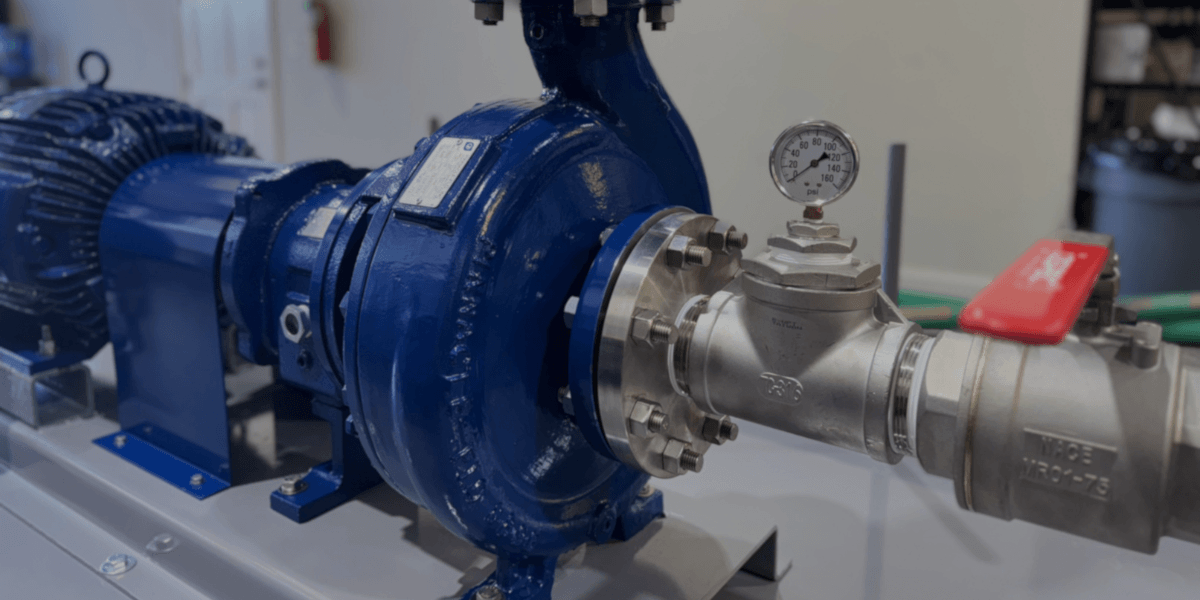
An above-ground self-priming trash pump is a surface-mounted pump that can pull wastewater up from below grade and stay ready to re-prime itself after the suction line is opened or drained.
The classic example is a Gorman Rupp Super T Series trash pump or any Super T style self-priming centrifugal trash pump.
Key points about above-ground self-priming trash pumps:
Mounted at ground level – Pump, motor, and controls are all accessible without entering a confined space.
Self-priming – Designed to handle air in the suction line and pull liquid from below grade.
Built for solids – Trash pump hydraulics are designed for wastewater, rags, grit, and debris.
More visible and louder – You’ll see and hear the pump, especially in open or residential areas.
Above-ground self-priming pumps are common in municipal plants, industrial sumps, bypass pumping, and high-service wastewater lift stations where ease of maintenance and fast response matter more than appearance.
Many new wastewater and lift station designs lean toward submersible sewage pumps because they install clean, stay out of sight, and keep surface noise down. For developers, engineers, and municipalities dealing with residential or mixed-use areas, this matters.
Common reasons submersibles win in new designs:
Aesthetics: No above-ground pump skid, no visible trash pump or piping, just a hatch and a control panel.
Noise control: Submersible pumps are far quieter than above-ground self-priming trash pumps.
Less exposed equipment: Less gear for vehicles to hit, vandalize, or weather to beat on.
Smaller surface footprint: Helpful on tight sites or when you’re working inside existing utilities.
So yes, submersible pumps often look better on a site plan. But the question you still have to answer is: Who’s going to maintain it, and how often do you expect to be in that wet well?
Above-ground self-priming trash pumps often win in the real world because they’re easier to work on, faster to troubleshoot, and simpler to keep online. If your system sees rags, grit, wipes, or solids-heavy wastewater, you already know you’re going to be in that pump more than the drawings suggest.
Advantages of self-priming trash pumps like Super T style units:
Ground-level access: No confined space entry, no crane to pull a submersible, no wrestling with long drop cords and discharge piping.
Faster maintenance: Pull a cover plate, clean the impeller, replace a seal, or swap out wear parts with standard tools.
Less downtime: When it’s easier to service, you’re more likely to fix issues before they become emergencies.
Better fit for “dirty” systems: If your lift station or plant sump clogs regularly, a self-priming trash pump simplifies response.
From Clark’s perspective, if you know a system is going to see abuse (wipes, rags, grit, construction debris) an above-ground self-priming trash pump often makes more sense than hiding a submersible where it’s hard to reach.
Decisions should be made on application, not appearance. A submersible sewage pump is a great choice when space is tight, the site is sensitive, and maintenance is infrequent. A self-priming trash pump is often a better choice when clogging and wear are part of life and quick maintenance is non-negotiable.
Questions Clark usually asks:
How often will this pump be serviced or inspected?
Monthly? Quarterly? Only when it fails?
What kind of solids are in the stream?
Grit, rags, wipes, industrial solids, or mostly water?
How critical is uptime?
Is this a convenience, or will an overflow cause environmental or compliance issues?
Who is doing the work?
A staffed maintenance group, or an overextended team that needs simple, fast access?
From a system design standpoint, submersible pumps and above-ground Super T style self-priming trash pumps solve the same problem in very different ways.
Here’s a simple side-by-side to frame the decision:
| Feature / Question | Submersible Sewage Pump | Above-Ground Self-Priming Trash Pump (Super T Style) |
|---|---|---|
Where is it installed? |
Fully submerged in the wet well |
At ground level, suction line down into wet well or pit |
How visible is it? |
Hidden underground |
Visible pump skid and piping |
Noise level? |
Very quiet |
Moderate noise at surface |
How is it accessed for maintenance? |
Must be lifted from wet well |
Open covers, work at ground level |
Confined space entry? |
Typically required for some work |
Usually not required |
Typical install cost? |
Higher (electrical, lifting hardware, guides, rail) |
Lower (pad, suction/discharge piping, enclosure if needed) |
Downtime during repairs? |
Higher—requires lift and time to pull/reinstall |
Lower—many repairs can be done in place |
Best fit applications? |
Subdivisions, tight urban sites, noise-sensitive areas |
Municipal plants, heavy solids, industrial, frequent service locations |
The takeaway: submersible pumps are great when visibility and noise are the big constraints, while self-priming trash pumps shine when you know you’ll be working on the pump regularly and need to keep downtime low.
Related Blogs | More pump comparisons
Trash pump failures in wastewater lift stations and bypass setups turn into operational and regulatory problems fast. When that unit goes down, you’re immediately into overflow risk, emergency rentals, and overtime.
Common impacts when a wastewater trash pump fails:
Lift station overflows or backups into upstream lines, manholes, or customer systems
Bypass operations stalled mid-tie-in or during a critical plant shutdown
Emergency rentals at premium pricing just to keep flow moving
Crews stuck on overtime babysitting pumps that could’ve been maintained earlier
Regulatory and environmental risk if spills or overflows reach waterways or sensitive areas
That’s why EV Pump talks so much about trash pump selection, preventive rebuilds, and critical spares. You won't necessarily notice a good pump strategy when everything is running. But you feel it immediately when it isn’t.
Having the right critical spares on hand is often the difference between a repair and a shutdown. Trash pump parts lead times can jump without warning, especially when everyone is chasing the same impellers or seal kits after a storm or regional event.
For wastewater trash pumps and lift station pumps, Clark usually recommends keeping at least:
Mechanical seal kits matched to your pump brand and model
Wear plates and the hardware that goes with them
At least one spare impeller or fast access to one locally
Suction check valve parts – flappers, seats, and hardware
Common gaskets and O-rings for inspection ports and covers
Basic bearing/sleeve kits for pumps that run 24/7 in critical service
If you want to go deeper, Clark breaks this down in more detail in EV Pump’s Critical Spares blog where he explains how to size spares to your duty cycle, lead times, and downtime risk.
Choosing between a submersible pump and a self-priming trash pump is only half the decision. The other half is who you trust to spec, service, and support that equipment.
What Clark recommends looking for:
Hands-on experience with both submersible and self-priming trash pumps in wastewater and lift station service
Honest feedback on OEM vs aftermarket parts and where each makes sense
Support across pump families – centrifugal pumps, diaphragm pumps, gear pumps, peristaltic pumps, mud pumps, and more
Help building a realistic critical spares list tied to your actual operating conditions
Someone willing to say “no” when a cheaper option isn’t worth the risk in your application
With us, the goal is to keep your system online, reduce avoidable downtime, and make sure the pump you pick matches how your facility really runs.
We can help you sort it out. We’ll look at your flows, solids, site constraints, maintenance resources, and downtime risk, then recommend a setup that fits your reality.
📞 Call Clark: 337-252-6487
🌐 Contact: evpmp.co/contact-us
.png?width=151&height=80&name=Logo%20-%20EV%20Pump%20%26%20Equipment%20(5).png)
EV Pump & Equipment is a leading provider of high-performance fluid handling solutions, specializing in custom pump systems and comprehensive services for industries like oil & gas, petrochemical, and municipal water. With a deep passion for pumps and a commitment to excellence, we deliver reliable, efficient solutions tailored to meet the unique needs of every client. Our hands-on approach and elite equipment ensure that your operations run smoothly and efficiently, every time.
When a pump patent expires, it opens the door for more options, more price points, and more risk if you don’t know what you’re buying. In this...
Centrifugal pumps are often considered the backbone of fluid handling systems, providing an essential solution for the movement of liquids, gases,...
If you’ve ever dealt with floodwaters, muddy pits, or construction site runoff, chances are you’ve come across a trash pump (or wished you had one)....